Meme Coin, What Five Years of Trading Experience Actually Teaches
You can order the same kind of articles for your own video to boost it on YouTube and Google. Just message the Telegram bot @sat_sit_bot. It writes articles around your video, embeds the video and publishes them on popular niche websites (no ads). Try it free: 50 articles on us.
· based on the channel rasmr
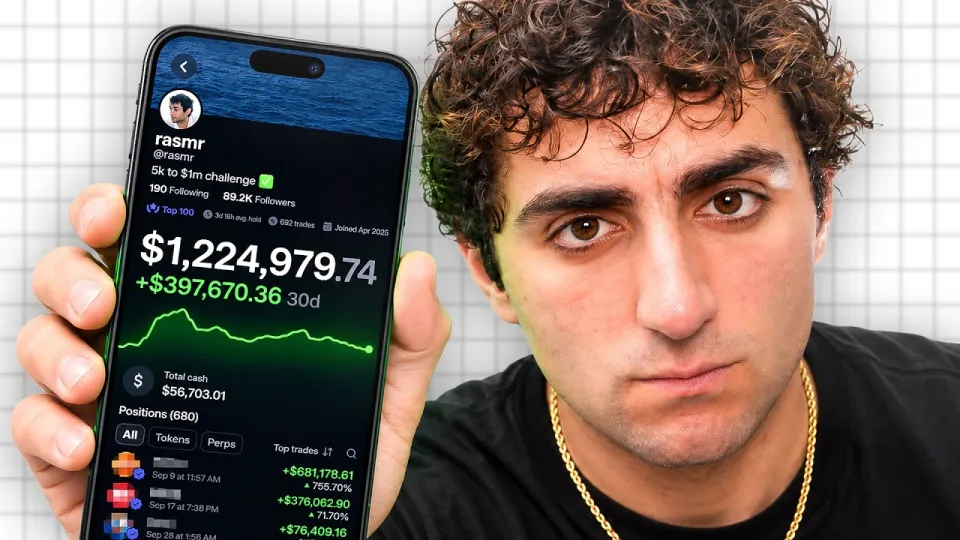
A meme coin is a cryptocurrency whose value is driven almost entirely by community attention, narrative and liquidity rather than by revenue, cash flow or a product. Trading them successfully is less about prediction and more about process: sizing positions, planning exits in advance and removing emotion from execution. The breakdown below follows the practical lessons from the rasmr video "5 Years of Memecoin Knowledge in 12 Minutes", and you can open the FOMO trading platform via this link to see how on-chain meme markets are actually traded.
What a meme coin actually is and why it moves so fast
A meme coin has no intrinsic cash flow, so its price is a function of how many buyers a narrative can attract and how much liquidity sits behind the order book. That is why a token can go from a few hundred thousand dollars of market cap to tens of millions in hours, and give it all back just as quickly.
Key structural features to understand before buying any meme coin:
- Narrative first. A token needs a story people can repeat in one sentence — a mascot, a cultural reference, an inside joke, a public figure. Without a repeatable narrative there is no demand curve.
- Liquidity second. Thin liquidity means your own sell order moves the price against you. Check how much capital is actually in the pool, not just the market cap number.
- Supply and holders. A token where a handful of wallets hold most of the supply has a built-in cliff: those wallets are the exit liquidity risk.
- Launch mechanics. Who launched it, how it was distributed and whether insiders got in before the public announcement determines how much of the upside is already priced in.
The uncomfortable truth is that most meme coins are zero-sum games between faster and slower participants. Treating them as investments in the traditional sense is a category error.
The market cap ladder: where meme coin traders actually sell
Experienced meme coin traders plan exits by market cap milestones, not by price targets on a chart. The reasoning is simple: price per token is arbitrary, while market cap tells you how much money has to enter to move the token higher.
A workable framework looks like this:
- Entry thesis. Before buying, write down the market cap you are entering at and the market cap you think the narrative can reach. If the gap is small, the trade is not worth the risk.
- Tranche exits. Sell a portion at the first milestone (for example, doubling), another portion at the next, and keep a small runner only with money you are fully prepared to lose.
- Round-trip protection. A position that goes up 100% and back to zero is a loss, not a missed opportunity. Taking partial profit is the single most repeated piece of advice among traders who survive multiple cycles.
- Time stop. If the narrative does not attract new buyers within a defined window, the thesis is wrong regardless of price.
Selling into strength feels wrong because the chart is green and the community is loud. That is precisely why it works: the loudest moment is usually when the marginal buyer has already arrived.
Emotions, greed and the losses they cause
The most expensive part of meme coin trading is not the token — it is the trader's reaction to the token. The patterns repeat across every cycle:
- Averaging down on a loser because the chart "has to bounce", turning a small planned loss into a large unplanned one.
- Getting greedy after a winner and refusing to sell, then watching the entire gain evaporate.
- Chasing a green candle at the top because the move looks like it will continue, which is exactly when early holders are selling into your order.
- Revenge trading after a loss, which usually compounds it.
The fix is mechanical rather than psychological: define the maximum you can lose on a single trade before you enter, set your exit levels in advance, and accept that missing a runner is a cost of doing business. A trader who consistently takes 2x and 3x in tranches will outperform one who occasionally catches a 50x but gives back every other position.
How early access and insider circles really work
A recurring question in meme coin communities is why some wallets always seem to buy before the announcement. The honest answer is that information travels through private groups and connected circles before it reaches public channels — launches are often discussed in closed chats before the token is live.
That has practical implications for everyone outside those circles:
- You are usually later than you think. By the time a token trends publicly, early participants may already be up multiples and looking for exit liquidity.
- Connections are a real edge, but not a strategy. Being in the right group helps; it does not remove the need for risk control.
- Verify the launch, not the hype. Check contract details, holder distribution and liquidity before assuming a token is early.
- Assume you are the exit liquidity until proven otherwise. Size positions accordingly.
This does not mean retail traders cannot profit. It means the edge has to come from discipline and speed of execution rather than from believing you have privileged information.
Common questions traders ask before their first meme coin trade
Most beginner doubts cluster around a few practical themes: how much capital to start with, how to spot a rug pull, and whether a themed token tied to a cultural event is a good investment.
- Starting small. Beginning with a small amount you can afford to lose entirely is the correct approach. The first goal is learning execution, not maximizing returns.
- Rug risk. Warning signs include concentrated holder distribution, unlocked liquidity, anonymous teams with a short history, and a narrative that exists only in the token's own marketing.
- Event-themed tokens. A token built around a game release or cultural moment can attract attention, but attention is not the same as sustained demand. Ask who is still buying after the news cycle ends.
- Holding sizeable unrealized profit. The question of whether to keep holding a large paper gain is answered by your exit plan, not by conviction. Profit that is never realized is just a number on a screen.
Risk management rules that survive every cycle
Risk management is the only part of meme coin trading that transfers reliably from one token to the next. Concrete rules that experienced traders keep coming back to:
- Never put more than a fixed small percentage of your portfolio into a single meme coin.
- Predefine the loss you accept on each position and exit when it is hit, without renegotiating.
- Take profit in at least two tranches; leave a runner only if it is already house money.
- Keep a written log of entries, exits and the reasoning behind them — patterns in your own behavior become visible fast.
- Avoid trading during emotional extremes: after a big win, after a big loss, or while watching someone else's gains.
Useful links
Final thoughts
The meme coin market rewards process over prediction: understand the narrative, respect liquidity, plan exits by market cap and keep emotions out of execution. The rasmr channel condenses five years of that experience into a short, dense format, and the recurring theme is consistent — the traders who last are the ones who sell into strength and cap their downside. If you want to study the mechanics hands-on, you can register on FOMO through this link and follow live markets. Start small, write your plan down, and treat every loss as tuition rather than a verdict.
Key takeaways
- Meme coins are narrative-driven tokens whose price depends on attention, liquidity and timing — not on cash flow or earnings.
- Most of the profit in a meme coin is made by exiting in tranches as market cap grows, not by holding for a single peak.
- Emotional decisions — averaging down a loser, round-tripping a winner, chasing a green candle — are the most common cause of losses.
- Early access to a launch is usually about information and connections, not about a chart pattern.
- Position sizing and a pre-written exit plan matter more than picking the 'right' coin.
Questions & answers
How much money should a beginner put into a meme coin?
Only an amount you are completely prepared to lose, ideally a small fixed percentage of your portfolio. The first trades are about learning execution and exit discipline, not about maximizing returns. Scaling up only makes sense once you have a repeatable process.
How can I tell if a meme coin is likely to rug?
Look at holder concentration, whether liquidity is locked, how the token was distributed and who is behind it. A narrative that exists only inside the token's own marketing, combined with a few wallets holding most of the supply, is a major warning sign.
Should I hold a meme coin that is already up several times?
Your exit plan should decide that, not your conviction. Taking profit in tranches locks in gains and removes the risk of round-tripping a winner back to zero. A small runner position is acceptable only if losing it entirely would not matter.
Why do some traders always seem to buy before a token is announced?
Launches are often discussed in private groups and connected circles before they reach public channels, so insiders can be earlier than retail. That advantage is real but not a substitute for risk management — by the time a token trends publicly, early buyers may already be selling.
Source: 5 Years of Memecoin Knowledge in 12 Minutes · Markdown version